
Bactrim Ordering refers to access information for Bactrim, the combination antibiotic sulfamethoxazole and trimethoprim, used in selected bacterial infections such as some urinary tract, respiratory, and skin infections. It is a prescription medicine whose suitability depends on the infection being treated, the patient’s medical history, and the likelihood that the bacteria involved will respond to it.
Review current Bactrim offer details and ordering requirements in one place.
Check product information, prescription handling, and listed price before checkout.
Because antibiotics need diagnosis and appropriate selection, Bactrim online ordering should be approached as a medication review process rather than a simple retail purchase. Product labeling, prescriber guidance, and pharmacy checkout requirements matter, especially when allergies, kidney issues, drug interactions, or prior antibiotic reactions are part of the picture.
What Bactrim is and when it may be used
Bactrim combines two antibacterial agents, sulfamethoxazole and trimethoprim, to block bacterial growth through complementary mechanisms. That combination has made it a long-standing option in clinical practice for specific bacterial infections when the organism is expected to be susceptible.
It may be used in certain urinary tract infections, some respiratory tract infections, selected skin and soft tissue infections, and other prescriber-directed indications. Even though it has broad antibacterial activity, it is not appropriate for every infection, and it does not treat viral illnesses such as colds or flu.
- Active ingredients: sulfamethoxazole and trimethoprim
- Drug class: sulfonamide-containing antibiotic combination
- Common dosage forms: tablets and oral suspension
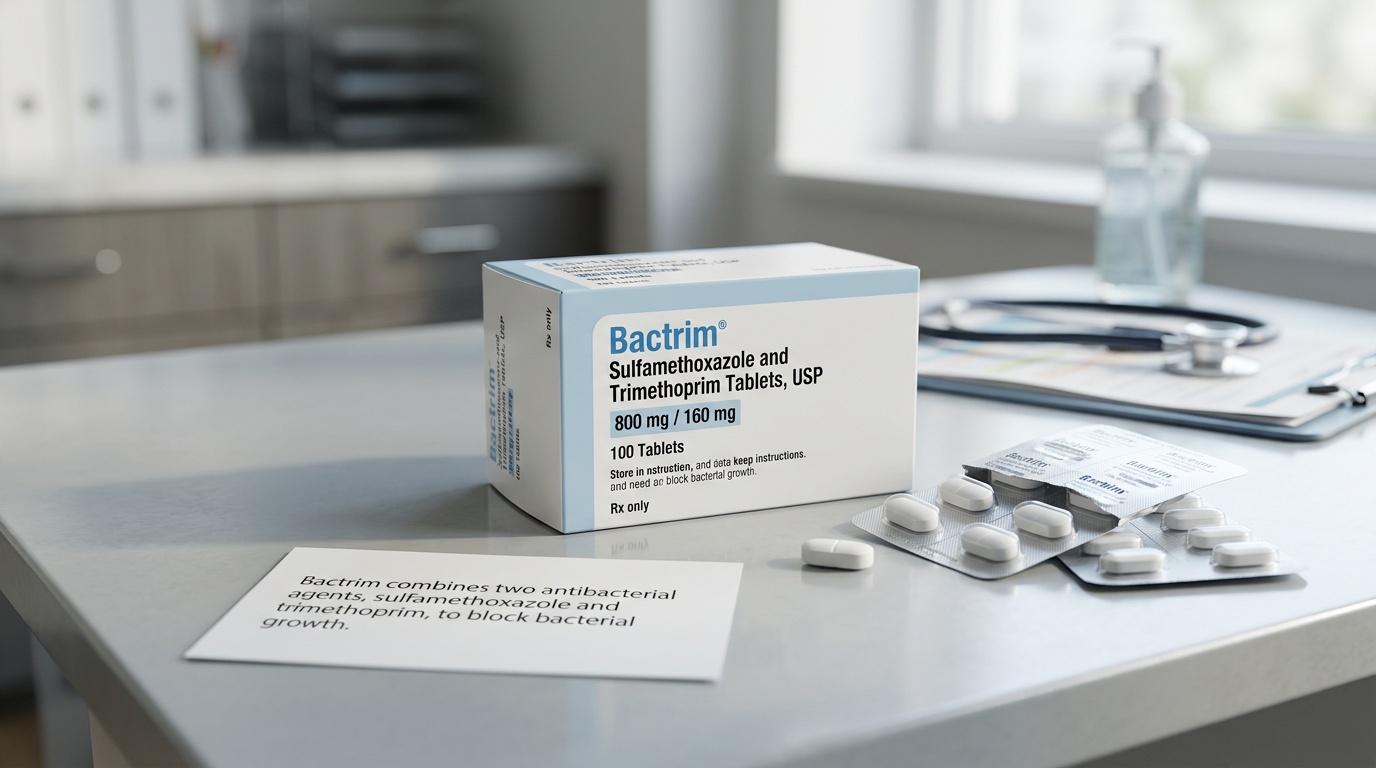
Bactrim Product and Pack Details
Bactrim combines sulfamethoxazole and trimethoprim and may be listed in more than one tablet strength or as an oral suspension. Product pages can differ by formulation, strength, manufacturer, tablet count, or suspension volume. These are characteristics for matching an offer to an existing prescription, not instructions for selecting a regimen.
Before checkout, compare both active ingredients, dosage form, labeled strength, quantity, package condition, expiry information, and supplied patient leaflet. A lower price can reflect a different pack or formulation, so compare like with like.
The suitable product depends on the diagnosed infection, patient factors, and the directions supplied by a prescriber and dispensing pharmacy. If the listing differs from the product specified for the order, ask the pharmacy to clarify it before payment rather than changing the product yourself.
- Verify both active ingredients
- Match formulation, strength, and pack quantity
- Review prescription handling and delivery terms
- Check the patient leaflet for the exact dispensed item

Safety issues that matter with Bactrim
Bactrim should be reviewed carefully in anyone with a history of sulfonamide allergy, significant kidney disease, certain blood disorders, or prior severe drug reactions. It also deserves extra caution in older adults and in people taking other medicines that can affect potassium, kidney function, or blood counts.
This medicine should be used only under appropriate medical supervision. Self-treatment with antibiotics can delay proper diagnosis and contributes to antimicrobial resistance, which makes later infections harder to treat.
- Review allergy history before use
- Tell the prescriber about kidney problems or blood disorders
- Provide a full medication list to check for interactions
- Use antibiotics only for confirmed or strongly suspected bacterial infection
Interaction and suitability checks before online ordering
Before Bactrim online ordering, the most useful step is to confirm that the order process includes medication screening or prescription handling consistent with local rules. This is especially important if the patient takes medicines that can interact with Bactrim or has conditions that require dose adjustment or monitoring.
The medication guide, product labeling, and pharmacy information page should be reviewed for contraindications, warnings, and administration instructions. If a listed service appears to bypass clinical review for a prescription antibiotic, that is a reason to pause and verify legitimacy before checkout.
- Check whether a valid prescription is required
- Review pharmacy licensing and contact information
- Read the product labeling and patient information leaflet
- Confirm how suitability, allergies, and current medicines are screened

Common side effects and when to get help
Common side effects can include nausea, vomiting, diarrhea, reduced appetite, and mild rash or itching. Many people tolerate treatment reasonably well, but any side effect that is persistent, severe, or worsening should be discussed promptly.
Urgent medical evaluation is needed for signs of a serious allergic reaction, extensive rash, breathing difficulty, severe skin symptoms, unusual bruising or bleeding, marked weakness, or other unexpected reactions. Because rare but important adverse effects can occur, patients should not ignore significant changes during treatment.
- Common: nausea, vomiting, diarrhea
- Possible mild reactions: rash or itching
- Get urgent help for severe rash, trouble breathing, or major allergic symptoms
- Contact a clinician for unusual bruising, bleeding, or pronounced weakness
What to look for on a Bactrim ordering page
A useful ordering page should make the strength, dosage form, prescription status, and fulfillment terms easy to review before purchase. It should also explain what information is needed at checkout, how prescriptions are handled, and where patients can find the official medication details.
Price can be one factor, but it should not be the only one. The better comparison points are whether the pharmacy provides clear product information, transparent checkout requirements, and a credible process for prescription verification and patient support.
- Compare dosage form and strength carefully
- Review listed price together with prescription handling
- Check delivery terms and pharmacy support details
- Avoid offers that promise antibiotic access without appropriate review
Common Questions About Bactrim Ordering
Are all Bactrim listings identical?
No. Offers can differ by dosage form, labeled strength, manufacturer, and quantity. Match the exact product specified for the order.
What should be compared before payment?
Review both active ingredients, form, strength, pack size, prescription process, shipping charges, delivery estimate, packaging, and final checkout total.
Can pack size determine how the medicine should be used?
No. Pack size is an ordering characteristic. The regimen must come from the prescription label and qualified clinical advice.
Where can the official product details be checked?
Use the leaflet supplied with the exact product and compare the active ingredients and labeled presentation with the FDA prescribing information linked below.
Official Bactrim Label
For an independent check of the Bactrim active ingredients, tablet presentations, packaging, and important safety information, review the FDA prescribing information for Bactrim. It supports product verification and does not replace individual prescription directions.
Content reviewed April 2026