Careful of Revese Mortgage Scams

Robert C. Weaver Federal Building HUD Headquarters

The FBI and the U.S. Department of Housing and Urban Development Office of Inspector General (HUD-OIG) urge consumers, especially senior citizens, to be vigilant when seeking reverse mortgage products. Reverse mortgages, also known as Home Equity Conversion Mortgages (HECM), have increased more than 1,300 percent between 1999 and 2008, creating significant opportunities for fraud perpetrators.

Reverse mortgage scams are engineered by unscrupulous professionals in a multitude of real estate, financial services, and related entities to steal the equity from the property of unsuspecting senior citizens aged 62 or older or to use these seniors to unwittingly aid the fraudsters in stealing equity from a flipped property.

In many of the reported scams, victim seniors are offered free homes, investment opportunities, and foreclosure or refinance assistance; they are also used as straw buyers in property flipping scams.

Seniors are frequently targeted for this fraud through local churches, investment seminars, and television, radio, billboard, and mailer advertisements.

A legitimate HECM loan product is insured by the Federal Housing Authority (FHA). It enables eligible homeowners to access the equity in their homes by providing funds without incurring a monthly payment. Eligible borrowers must be 62 years or older who occupy their property as their primary residence and who own their property or have a small mortgage balance. See the FBI/HUD Intelligence Bulletin for specific details on HECMs as well as other foreclosure rescue and investment schemes.

Seniors should consider the following:

* Do not respond to unsolicited advertisements.

* Be suspicious of anyone claiming that you can own a home with no down payment.

* Do not sign anything that you do not fully understand.

* Do not accept payment from individuals for a home you did not purchase.

* Seek out your own reverse mortgage counselor.

If you are a victim of this type of fraud and want to file a complaint, please submit information through our electronic tip line or through your local FBI office. You may also file a complaint with HUD-OIG at HUD Complaints or by calling HUD’s Hotline at 1-800-347-3735.

Source: PopDeCay

Another Real Estate Scam, Call Me on My Foreign Mobile Phone

mobile-phone-scam

One of the scam’s that has been going on since at least 2007 is to send an e-mail to you stating they are interested in viewing one of your properties. The e-mails are usually sent to someone who is renting property and Realtors® seem to be a prime target.

The e-mail goes something like this:

“I am interested in viewing one of your properties, could you please call me on my foreign mobile +882 135 502 99 to setup a time. As I am travelling at the moment I am unable to pickup emails regularly so please call.
Kind regards,
Liz Casey
———
Mobile: +882 135 502 99 (of course do not call!)
Email: lizcasey@zapak.com”

~~~~~~~~~~
It’s obvious that if you receive an e-mail like this that it’s a scam. There is no mention of what property they are referring to, or if there is, the next thing they will do to get your money is send you a bogus check as a deposit to hold the property, most often in the form of a certified check. Next, they will e-mail you and say they have overpaid you, or they decided they did not want the property and request a refund.

I Googled this scam and came up with someone who had experience with this and here is what they wrote:

“They will eventually get around to talking you into discontinuing the ad then they will send a counterfeit check. Next comes a request to refund some of the money from the bogus check claiming they overpaid. It’s amazing that folk’s fall for these scams. We played one along and got a $25.00 reward for turning the check over to the bank. If you play along with a scammer and receive a check. don’t handle it, the FBI may want to lift prints from it.”

I’m not sure the FBI is interested at all. The last time I tried to report a scam they were not interested and really did not even want to talk about it..
.

Enter Your Exhibits in the Nevada County Fair

fair-grounds
Want to enter something in the Nevada County Fair? There’s still time! To enter on-line using the Fair’s on-line entry system, the deadline is Friday, July 17 at 5 pm. It’s easy, it’s fun, and it’s free. Just log-on to the Fair’s website at Enter Online and follow the step-by-step process.

Join the thousands of Nevada County residents who enter exhibits each year in the more than 300 available categories. It’s always fun to show-off a special creation, baked good, home-grown item, a collection, an antique, or a photograph. Don’t delay – enter now!

Complete descriptions of all categories are available online in the Fair’s Competition Handbook. The handbook is also available at the Fair office, area libraries, chamber of commerce offices, and various sponsoring merchants.

For more information, visit Nevada County Fair or call (530) 273-6217.

Michael Jackson’s Neverland Home has a Buyer

Michael Jackson's Neverland

LONDON – French fashion tycoon Christian Audigier is set to buy Michael Jackson’s Neverland home.

“I have decided to buy that house,” the Mirror quoted him as telling French TV.

The designer is also planning to build a theme complex dedicated to the icon similar to Elvis Presley’s Graceland.

He may also offer online tours for fans to the ranch that Jackson turned into a personal theme park.

Colony Capital who had purchased the California ranch in 2008 for 20million-pound is keen to sell it after the legend’s demise.

Neverland is now worth an estimated $97,150,000.

California’s Governing Body Postures While California Collapses

Rome Burning
Rome Burning

Anyone watching our legislature and Governor try to come up with a budget solution knows if they were running a private company, they either would have been fired by now or standing in a soup line because the company would have gone bankrupt. Incredible, watching them posture while those of us in the private sector have seen companies go bankrupt, business decrease and our income and assets go down downhill in a bread basket.

Yet those clowns governing our state posture while trying to figure out how to raise more taxes, or not raise taxes, afraid of cutting any fat because they are afraid of offending the powerful state employees unions which taints their decision making in balancing the budget. But of course, why should they worry, they are receiving full pay, a generous car allowance, per diem and of course free lunches from the special interest lobbyists.

In the mean time, State employees, many with salaries under $30,000 get a hit of a 14 percent pay cut. School teachers are being laid off instead of school superintendents and their staff. Proposition’s 98 monies purpose was to fund K-14. K-14 has seen an enrollment drop of 70,000 students since Prop. 98’s passage. Yet the various school districts use of Prop. 98’s monies have increased the overhead costs of running their school districts to a record 76 percent! Do you think they might cut overhead instead of laying off teachers? (See my blog, California Board of Education Cooks Their Books)

So while one side of the political aisle is blaming the other side of the political aisle for the budget crisis, California still holds the title that no other state in the nation has: “The Lowest Bond Rating.” On July 6, 2009, Fitch Ratings slashed the Golden State’s long-term bond rating from A- to BBB. The BBB rating is just two clicks above a rating for junk bonds. Junk bonds are not sold in a junkyard; instead, junk bonds are low-grade bonds issued by companies without long track records or with questionable ability to meet their debt obligations. They are referred to as junk bonds because most investors do not invest in the low-grade bonds. The bolder investors purchase the risky securities because of their very high interest rates.

Fitch cited the reason for its actions was the state’s inability to close the Budget gap and using IOUs to pay its obligations. Despite Fitch’s decision, Standard and Poor’s and Moody’s did not lower the state’s rating quite as low. Maybe they see something we don’t?

The BBB rating will result in the state incurring higher issuance costs for its general obligation bonds. State Treasurer Bill Lockyer said such a rating cut could cost the state $7.5 million in interest over a 30-year period. The State Treasurer’s projected issuance costs are significant when they are put into the context of the ongoing battle to close the State’s Budget deficit.

This seems like something from Roman times, the governing body of California, like Caesar Augustus, playing a fiddle while California burns. By the way, it wasn’t too much later that the Roman Empire started its collapse wasn’t it? Anyhow, what do you think?

California Real Estate Sales Up

 house-selling


  A survey by the California Association of Realtors found that sales of California real estate have actually increased from the end of 2008 to the beginning of 2009. Survey respondents indicated that attractive prices and low mortgage rates were the leading factors motivating them to buy. For more see the following article from HousingWire 

After a two-year downturn, California home sales have increased 27% through the end of 2008 and beginning of 2009, spurred by low home prices, mortgage rates and a belief that rates will increase in the near future, according to a survey by the California Association of Realtors (CAR).
Lower home prices encouraged 68% of the survey’s respondents, while 39% said low interest rates put them in the market for a new home. An additional 23% named the belief that mortgage rates will increase in the near future as a motivating factor in their decision to buy a home.
Distressed sales made up more than half of California’s home sales. The 38% percent of homebuyers that purchased real-estate-owned (REO) properties reported they had the most difficulty securing financing, on averaging rating their experience an 8.9 on a scale of 10. While short-sale properties only accounted for 13% of California sales, buyers rated their financing experience the easiest, a 7.6 on average. The 49% of home buyers involved in a traditional transaction rated their financing experience a 7.7 on average.
The glut of bank-owned properties on the market has kept California’s housing inventory stocked, giving buyers many options.

“In contrast to peak years when inventory levels were at record lows, inventory levels over the past several months have been in the range of the long-run average,” CAR chief economist Leslie Appleton-Young said in a release. “With many homes available on the market at more affordable prices in the past year, home buyers have been devoting more time to considering and carefully selecting their home during the researching and buying process.”

The average home buyer spent 8.4 weeks considering their purchase in 2009, up from 7.2 weeks in 2008. Buyers spent 10.3 weeks searching for a home with their real estate agent, compared to 8.7 weeks in 2008.

Nearly one-third of respondents who purchased in a traditional market sale said they either did not know or were not sure they knew the terms of their loan. A smaller percentage, 12%, of REO buyers and 7% of short-sale buyers indicated the same response.

This article has been republished from HousingWire. You can also view this article at
HousingWire a mortgage finance news website


Mother Lode Horse Show Results Available

mother-lode-horse-show-20

The Nevada County Fairgrounds was filled with horse enthusiasts during the last weekend in June as exhibitors competed in the 2009 Mother Lode Horse Show. This annual three-day event gives spectators an opportunity to observe participants work with their horses as they compete in Driving, English, Halter and Western Shows. At the conclusion of each class, competitors are awarded their placing, which is a demonstration of achievement in horsemanship. The results of the Mother Lode Horse Show are available at Nevada County Horse Show Results.

You will need Adobe Reader to view the results. If you do have Adobe Reader you may download it here   Adobe Reader

The Mother Lode Horse Show is the official horse show of the Nevada County Fair. This year’s Nevada County Fair starts Wednesday, August 12 and runs through Sunday, August 16. For more information about the Fair, call the Fairgrounds office at (530) 273-6217 or visit their web site at Nevada County Fair

Press release by Wendy Oaks
Publicist, Nevada County Fairgrounds

Fannie Mae New Loan-to-Value Ceiling for Home Affordable Refinance Program

fannie-mae-building
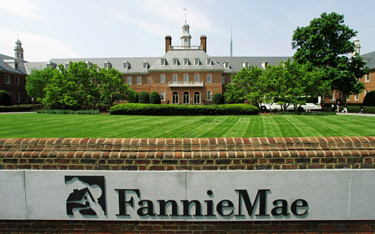
Fannie Mae (FNM/NYSE) announced today that the company is providing information to servicers regarding changes to the Home Affordable Refinance Program (HARP) that permits refinancing of existing Fannie Mae loans with loan-to-value (LTV) ratios up to 125 percent. The loans will be eligible for delivery on or after September 1, 2009.

“This step aims to reach even more borrowers who would benefit from a lower payment,” said Michael J. Williams, President and Chief Executive Officer. “Many borrowers in good standing have been shut out from the benefits of refinancing due to significant declines in property values across the country. By broadening the scope of the initiative, more borrowers will experience savings on their monthly mortgage payments and have a better chance of sustaining homeownership over the long term.”

Previously, HARP allowed for refinancing of Fannie Mae loans with LTVs up to 105 percent. With the expansion, loans with LTVs above 105 percent and up to 125 percent will be eligible for refinancing through the company’s Refi Plus™ manual underwriting option. For loans with LTVs above 105 percent, borrowers must refinance through their existing servicer and the new loans must be fully amortizing fixed-rate mortgages with terms greater than 15 years up to 30 years.

In conjunction with the LTV eligibility expansion, Fannie Mae will offer a special .50 percent reduction in the loan-level price adjustment charged for loans with LTVs above 105 percent and loan terms of 20 and 25 years. The reduction is intended to incent borrowers to select shorter terms and build positive equity in their homes sooner than with a typical 30-year mortgage.

HARP is part of the Administration’s Making Home Affordable plan aimed at stabilizing the housing market, helping Americans reduce their mortgage payments to more affordable levels, and preventing avoidable foreclosures. For more information, visit Making Home Affordable.gov

Value of Home Goes Down, Home Owners Walk Away

foreclosed-home

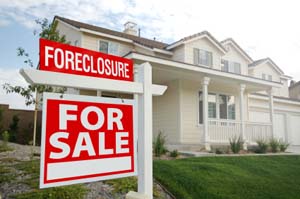
A study of the Massachusetts housing market by researchers from Northwestern University and the University of Chicago concludes that a home owner’s propensity to default increases the further their loan goes under water.

The study found that home owners begin to walk away after declines of 15 percent or more. More than 17 percent of households would default, even if they can afford to pay their mortgage, when the equity shortfall reaches 50 percent of the value of the house.

The researchers found:
• People under the age of 35 and over the age of 65 are less likely to say it is morally wrong to default compared to middle-aged respondents.

• People with a higher education (8 percentage points) and African-Americans (14 percentage points) are less likely to think it is morally wrong to default, whereas respondents with a higher income are more likely to think it is morally wrong.

• Default is considered less morally wrong in the Northeast (6 percentage points) and West (8 1/2 percentage points).

• There was little difference in the moral view of strategic default among Republicans and Democrats, but independents are less likely to say defaulting is immoral.

• Respondents who supported government intervention to help homeowners were 12 percentage points less likely to say strategic default is immoral.

So what do you think, is it OK to walk away if you are still able to make your monthly payments on your mortgage?

FTC Cracks Down on Real Estate Con-Artists

mouse-scammer

I was wondering when the Fed’s were going to crack down on con artists which advertise get rich quick schemes in real estate. The con artists offer to make you rich by using their “proven techniques in real estate”

These con artists also offer help on repairing their credit, landing new jobs, starting lucrative work-at-home businesses and obtaining government money to pay off bills. Surging like the unemployment rate, scams, touted on Web sites and infomercials, have bilked consumers out of hundreds of millions of dollars, according to the Federal Trade Commission.

Last Wednesday the FTC, working with local authorities across the country struck back and filed criminal charges against many of the scammers.

According to the Chicago Tribune

“The (FTC) announced a series of civil and criminal charges against alleged con artists who have preyed on economic anxiety to lure consumers into making upfront payments for services that either fall far short of the promises or never materialize.

“To con artists, today’s challenging economy presents an opportunity to exploit consumers’ fears and bilk them out of money,” said David Vladeck, director of the Federal Trade Commission’s Bureau of Consumer Protection.

Vladeck said that more than 100 cases have been filed nationwide this year as part of Operation Short Change, a task force consisting of the FTC, the Justice Department and officials in 13 states and the District of Columbia. The cases included eight filed Wednesday by the FTC.

One of the new cases alleged that five California companies bilked hundreds of thousands of consumers nationally out of about $300 million by offering fraudulent programs related to real estate or online businesses.

The companies — John Beck’s Amazing Profits, John Alexander LLC, Jeff Paul LLC, Mentoring of America and Family Products — and five people who founded or run them were accused of violating federal laws related to telemarketing and consumer fraud.

The FTC accuses the companies of making “false and unsubstantiated claims about potential earnings” customers could make by following their advice in books, DVDs and CDs titled “John Beck’s Free & Clear Real Estate System,” “John Alexander’s Real Estate Riches in 14 Days” and “Jeff Paul’s Shortcuts to Internet Millions,” which sold for $39.95 each.

People who purchased the programs unknowingly were signed up for additional monthly charges of $39.95. Messages left with the companies were not returned Wednesday.”

I did a Google search and John Beck’s site is still up and running, ready to take your money and help him get rich.