Michael Jackson’s Former Rental House Sells For $3.1 Million

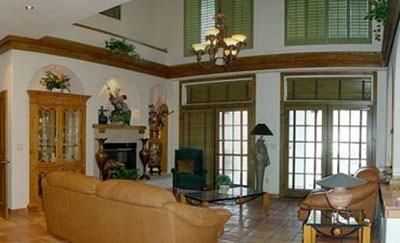
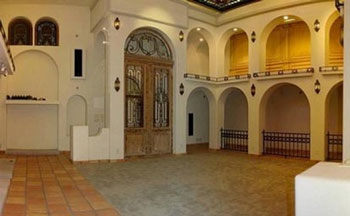
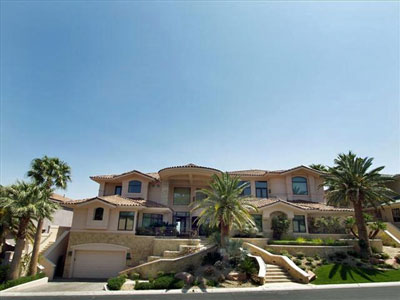
A sprawling Las Vegas mansion, once rented by Michael Jackson, was sold for $3.1 million Thursday, the Nevada palace reportedly being the spot where the late King Of Pop met the physician, Dr. Conrad Murray, who has been investigated in the wake of his shocking death.

The house, which Jackson lived in from late 2006 to 2007, spans 15,461 square feet and has seven bedrooms, ten bathrooms, a tennis court, a basketball court and a 20-seat theater.

The mansion is the largest piece of real estate sold in Sin City in nearly a year’s span, no small feat considering that the sagging economy has depressed both the city and its’ real estate.

The sale of the 15,000-square-foot (1,400-square-meter) house was the city’s biggest in almost one year, according to an e-mailed statement today from Vegas Fine Estates, the broker on the deal. The buyer was a doctor-lawyer couple with property in California and Asia, the broker said without giving their names.

Jackson, who died June 25 from a drug overdose, paid $1 million to rent the seven-bedroom house for six months over 2006 and 2007 after returning from a self-imposed overseas exile, according to the statement. The luxury home includes tennis and basketball courts and a 20-seat theater.

Source:  Bloomberg.com

California December Home Sales Increased

· Overall, existing, single-family home sales increased 4 percent in December to a seasonally adjusted rate of 558,320 units on an annualized basis.

· The statewide median price of an existing single-family home increased 0.8 percent in December to $306,820, compared with November 2009.  However, portions of Nevada County median prices dropped.   Grass Valley areas median price in December 2008 was $300,000 compared to $235,000 in December 2009.  A drop of -21.7 percent.  Nevada City area median price in December 2008 was $331,000 compared to December 2009 of $324,500, a drop of -2.0 percent.  In Truckee area median price increased 6.5 percent from $469,500 in December 2008 to $500,000 in December 2009.

· C.A.R.’s Unsold Inventory Index fell to 3.8 months in December, compared with 5.6 months in December 2008.

LOS ANGELES (Jan. 22) – Home sales increased 1.7 percent in December in California compared with the same period a year ago, while the median price of an existing home rose 8.4 percent, the CALIFORNIA ASSOCIATION OF REALTORS® (C.A.R.) reported today.

“As expected, the large year-to-year sales gains have diminished substantially compared with earlier in the year,” said C.A.R. President Steve Goddard. “However, home sales in December were strong, and were comparable to sales of late 2008. Activity in December can be attributed in part to the extension and expansion of the home buyer tax credit, as well as near-historic highs in affordability due to current price levels and low interest rates.

“For the second consecutive month, California’s median home price rose year-to-year in December, and had the largest year-to-year increase in more than three years,” said Goddard. “The state’s median price also remained above $300,000 for the second straight month.”

Closed escrow sales of existing, single-family detached homes in California totaled 558,320 in December at a seasonally adjusted annualized rate, according to information collected by C.A.R. from more than 90 local REALTOR® associations statewide. Statewide home resale activity increased 1.7 percent from the revised 549,190 sales pace recorded in December 2008. Sales in December 2009 increased 4 percent compared with the previous month.

The statewide sales figure represents what the total number of homes sold during 2009 would be if sales maintained the December pace throughout the year. It is adjusted to account for seasonal factors that typically influence home sales.

The median price of an existing, single-family detached home in California during December 2009 was $306,820, an 8.4 percent increase from the revised $283,060 median for December 2008, C.A.R. reported. The December 2009 median price rose 0.8 percent compared with November’s $304,520 median price.

“Home sales were unusually strong in December and were more consistent with peak season trends,” said C.A.R. Vice President and Chief Economist Leslie Appleton-Young. “Historically, the median price declines November through February and then rises in March. However, lean inventory, historically low interest rates, and incentives for home buyers have resulted in California’s housing market experiencing non-seasonal variations.

“Looking forward, we expect the state’s median home price to fluctuate around the $300,000 level throughout the first quarter,” said Appleton-Young. “While we expect to experience price gains in the near term, it remains to be seen how the market will fare once the Federal Reserve discontinues its purchase of mortgage-backed securities.”

Continue reading California December Home Sales Increased

Nicolas Cages $4.95 Million Home Sells in One Day

The upper end market for real estate is picking up.  This reminds me of prior downturns, when people waited for the bottom of the real estate market to turn, and when they finally decided to buy, they paid thousands more by waiting because the bottom had passed them by.  Which brings up  actor Nicolas Cage’s foreclosed 14,306-square-foot Las Vegas home sold the first day it was on the market for $4.95 million. The deal is expected to close today.

Cage purchased the six-bedroom, seven-and-a-half bathroom home in September 2006 for $8.5 million. He owes the Internal Revenue Service nearly $6 million in back taxes, and the IRS has foreclosed on four of his homes including two in New Orleans and one in California.

Cage, who had a variety of properties scattered all around the world, picked up this home in 2006 for $8.5 million. In July 2008 he listed it for $9.95 million. The 14,000-square-foot home with a 16-car garage was later discounted to $9.49 million. The seven-bedroom home is blandly extravagant with a sweeping staircase, home theater, elevator and panoramic views of Las Vegas. The home has a pool and spa and is located in a gated community for privacy. After it was foreclosed it got a discount in line with current Las Vegas prices, Lowman sold Cage’s former home for close to the asking price of $4,950,000.

Last November Cage’s New Orleans homes were sold back to the bank for a total of $4.5 million. His Rhode Island home still appears to be listed at $12 million.

Kenneth Lowman, owner of Luxury Homes of Las Vegas, listed and sold the Las Vegas property. He says the luxury home segment of the market moves in tandem with the stock market. As stock rise, so do top-dollar properties.

“I’ve been preaching to all of my potential buyers who are waiting in the wings the same message over and over. If you have the wherewithal, now is the time,” Lowman says.

Existing-Home Sales Down, but Prices Rise

Existing-home sales fell as expected in December after first-time buyers rushed to complete deals during the months leading up to the original November deadline for the tax credit. However, prices rose from December 2008 and annual sales improved in 2009, according to the National Association of REALTORS®.

Existing-home sales—including single-family, townhomes, condominiums and co-ops—fell 16.7 percent to a seasonally adjusted annual rate of 5.45 million units in December from 6.54 million in November, but remain 15 percent above the 4.74 million-unit level in December 2008.

There were approximately 5,156,000 existing-home sales in 2009, which was 4.9 percent higher than the 4,913,000 transactions recorded in 2008. It was the first annual sales gain since 2005.

Tax Credit Creates Swing in Market

Lawrence Yun, NAR chief economist, says there were no surprises in the data.

“It’s significant that home sales remain above year-ago levels, but the market is going through a period of swings driven by the tax credit,” he said. “We’ll likely have another surge in the spring as home buyers take advantage of the extended and expanded tax credit. By early summer the overall market should benefit from more balanced inventory, and sales are on track to rise again in 2010.”
Continue reading Existing-Home Sales Down, but Prices Rise

New Rules for FHA Loans Makes It Harder to Get a Loan


Due to its wreaking financial problems, the Federal Housing Administration is tightening its lending requirements.

  • The FHA is federally mandated to maintain reserve funds at 2 percent or greater.  As of November, the agency reported that its fund had declined to .53 percent.  The funding is used to cover losses on mortgages insured by the FHA that go into default.
  • Loans insured by the FHA generally are less expensive to borrowers because of the lower down payment requirements.  However, these loans also have fees, such as up-front mortgage insurance.  To help the agency raise its cash reserves, the FHA is increasing the up-front mortgage insurance premium from its current 1.75 percent to 2.25 percent.  HUD released a Mortgagee Letter today making the premium increase effective in the spring.
  • The agency also is raising the minimum credit score requirements.  Currently, borrowers with FICO scores as low as 500 have been approved for FHA-insured loans.  Under the policy changes, new borrowers will be required to have a minimum FICO score of 580 to qualify for the FHA’s 3.5 percent down payment program.  New borrowers with less than a 580 FICO score will be required to put down at least 10 percent.  FHA expects this to take effect in early summer once it passes the normal regulatory process.
  • The new policy also will reduce the amount of money sellers can provide to home buyers at closing to 3 percent, down from its current 6 percent, of the home’s price.  The change brings the agency in line with industry standards and removes the incentive to inflate appraisals.  The FHA expects this to take effect in early summer after it passes the normal regulatory process.

Source: CNN Money

Snow Pictures From My Deck

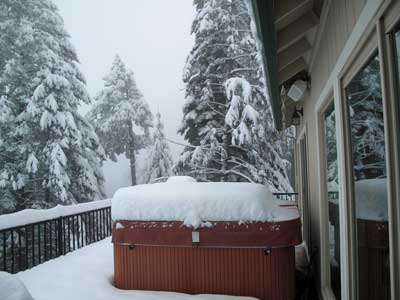
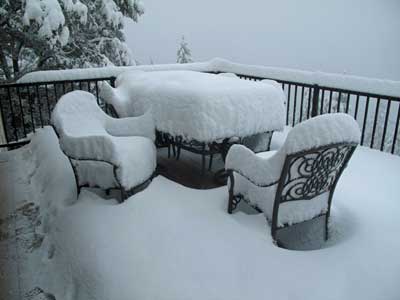
My house is located in Cascade Shores, outside of Nevada City.  I’ve used a GPS and the elevation of the house is 3,700 feet.  On a clear day, you can see Scotts Flat Lake.  On a very clear day, you can see the Coast Range Mountains, but there aren’t too many days when that happens. I took these shots at around 8 am this morning.  There’s 12 to 14 inches of snow, depending upon where I measured on the deck.

Looks like a nice Christmas Tree

The top outside edge of the hot tub has 14 inches of snow.

There's 12 inches of snow on top of the table
Looking downward from deck

Quickest, Easiest Way to Make More Sales: Re-activate Past Customers

Lisa J. Lehr

by Lisa J. Lehr   (Lisa is a regular contributor to this site)

If you’ve been in business for any length of time, you know that getting new customers is a lot more work—and a lot less profitable—than selling more to your existing customers. Needless to say, people who’ve bought from you in the past already have a relationship with you, so they don’t need to be sold; they only need to be reminded to come back for more.

People have short memories and fickle habits. If your competitor has offered your past customers some sweet deal, “your” customers may well stray from you to cash in the coupon (or whatever it is), receive good service, and switch loyalties, never to be seen again. The good news about that is…you can do the same thing, and get them back. And not only that: you can keep them coming back.

First step: get in touch with those past customers. If you already have their e-mail addresses, great; if not, you’ll need to use postal mail. An inexpensive, simple way to do this is with a postcard, which will need to do the following:

·         Tell your readers what to do: visit your store (for example, bring in the postcard for a special offer) or your website (to opt in to your list).

·         Follow the usual rules of good sales writing. Words sell!

·         Be attractive: following the rules of good design, yet not devoting so much space to graphics that you run out of space for words.

·         Entice your readers with what they’ll get when they take the next step. (Coming into your store gets them a discount or a freebie; opting in to your list gives them a heads-up on all specials, sales, and new offerings.)

·         Use both sides of the postcard. An often-overlooked strategy: put a map to your place of business. You’d be surprised—even customers who know where you’re located are more likely to visit if you show them how to get there!

·         Be prepared with the second step, i.e., whatever you’re going to give them when they visit your website or your store.

Now, once you’ve reestablished your relationship with your past customers, keep them! This is where your e-mail list is so important. You’ll stay top-of-mind, and when they need something, they’ll come to you—not your competitor. An essential part of the process is a website. The e-mails they get from you will be completely automated and anti-spam-compliant.

If you don’t have one yet, we seriously need to talk!

Lisa J. Lehr is a writer and copywriter living in Grass Valley. She can help you promote your business with a full range of online and offline marketing pieces. A member of Empire Toastmasters, she’s available to speak to your business or professional group. Visit her website www.justrightcopy.com for more information, opt in for a message series, and receive a free Marketing Guide.

Your Mortgage Closing Costs Forced to be More Transparent

Big changes have finally arrived in making good faith estimates when getting a home loan. The following  are required on good faith estimates as of January 1st of this year:

Consistency.

Lenders are now required to use a uniform three-page document when they give prospective borrowers a good faith estimate, says Vicki Bott, deputy assistant secretary for single-family housing at HUD.

Lenders also are required to provide the document within 72 hours after prospective borrowers apply for a loan.

This will allow consumers to figure out a loan’s total cost, including fees, and compare loan offers on an apples-to-apples basis, Bott says. “We encourage consumers to shop for the best rates and fees, and not just the best rate,” she says.

Transparency.

Many borrowers who bought homes during the housing boom later discovered that their loans contained hidden bombs that made their mortgages unaffordable. The new good faith estimate requires lenders to disclose features that could drive up costs. For example, the document requires lenders to disclose whether your interest rate will rise — as would be the case with an adjustable-rate mortgage — and if so, by how much. Lenders will also be asked whether the loan includes balloon payments or imposes penalties for paying the loan off early.

“All of these are really important questions,” says Helene Raynaud, vice president of housing for the National Foundation for Credit Counseling. “It will be able to raise red flags for consumers.”

Trade-offs.

Some lenders offer borrowers a lower interest rate in exchange for higher upfront costs — or vice versa. A new table in the good faith estimate (see box) helps borrowers compare how different interest rates and settlement charges will affect monthly payments.

Reliability.

Lenders are required by law to give mortgage applicants a copy of their settlement costs, known as a HUD-1, at least one day before closing. In the past, though, many borrowers discovered that the costs shown on the HUD-1 bore little connection to those provided in the good faith estimate.

The new rules will make it much more difficult for lenders to depart from their good faith estimates, Bott says. The new HUD-1 includes a line-by-line comparison to the good faith estimate, making it easy to identify any change in costs.

Lenders are prohibited from increasing costs they control, such as origination and processing fees. Fees for third-party services, such as appraisals and title insurance, can increase no more than 10% from those provided in the good faith estimate, as long as the borrowers use providers selected by the lender. The limit doesn’t apply if borrowers select their own third-party providers.

Other costs that aren’t subject to the 10% limit include the initial deposit for the borrower’s escrow account, daily interest charges and homeowner’s insurance (see box).

Source: USA Today

HUD has published a guide for home buyers, Shopping for Your Home Loan: HUD’s Settlement Cost Booklet. You can find it at HUD

Reprinted for educational purposes

Owner of Detroit Pistons Puts House on the Market for $47,000,000


View Larger Map

View as larger map and you can see the layout of the property.

For years, it was known as the Christiansen ranch, even though that family wasn’t its original owner. In subsequent years, the parcel that bears the name Glendale Stock Farm was owned by high-profile people including securities trader and philanthropist Boyd Jefferies and most recently, the Davidson family.

Now, according to the Wall Street Journal Ms. Davidson, owner of the Detroit Pistons, said it was time for a change.  “It’s got everything but a post office” she said of her 10 acre property, which includes the main house but also has two guest houses, a former stable and two barns. Ms. Davidson is the widow of Bill Davidson. Mr. Davidson passed away in March 2009 at the age of 86.

Ms. Davidson calls her estate a “landmark” property and says she believes the $47 million asking price is fair. One of the few residential properties in the county that’s allowed to have several structures, Stony Creek Ranch’s buildings offer 16,000 square feet of living space; its white-trimmed red barn is a familiar sight on a two-lane road connecting Aspen and Snowmass Village. Larry Jones and Katie Grange, both of BJ Adams and Company, have the listing.

Despite its square footage, most of the rooms in the main house are modestly sized. The decor is typical Rocky Mountain luxury—radiant stone floors, warm-toned wood—with an emphasis on animal-based accessories. Rooms are decorated with paintings of bison and cows, elk-antler chandeliers, mounted deer heads and upholstered cowhide chairs. The “bovine bathroom” has walls upholstered in black-and-white cowhide.

In 1996, Mr. Davidson (who was dating Ms. Davidson at the time) bought the property for $8.25 million from Wall Street trader Boyd Jefferies, now deceased, and his wife, Sharon. The Davidsons liked the property’s potential as a compound for their growing families.”

The listing information states the following:
2761 Owl Creek Road
Aspen, Co

Price: $47,000,000

Style: Single Family
Bedrooms: 13
Baths Full: 10
Baths Half: 3
Sq Ft: 16000.00
Year Built: 1999

County: Pitkin
Subdivision: Owl Creek
Lot Size: Refer to Acreage
Tax Fee: 29035.00