All posts by jd

Real estate broker, civil engineer and general contractor.

Help Your Headaches with Herbal Remedies

by Lisa J. Lehr

Headaches are among the most frequently reported health problems. Migraines are the most common type; many people suffer occasional tension headaches, with chronic tension headaches less common. These may co-exist in adults who have migraines, causing “mixed headaches”; add in sinus and cluster headaches, and the number of headache sufferers probably approaches 100%.

We generally have three categories of remedies to choose from: prescription drugs, over-the-counter medications, and so-called natural remedies. Some people go straight to the doctor for a prescription, thinking that “strongest” equals “best.” This is not a good idea, for several reasons.

First, prescription drugs can be terribly expensive. Those who have good insurance coverage may not be concerned about cost, but then there are side effects. Possible side effects of prescription medications include nausea, vomiting, diarrhea, dizziness, lightheaded, drowsiness, hair loss, muscle weakness, cramps, and (rarely) stroke or heart attack.

Taking multiple prescription medications, or even certain ones combined with certain supplements, can be extremely dangerous. Often the doctor and pharmacist don’t say anything about this because they don’t know that a patient is taking so many things—if the patient goes to more than one doctor, for example, or takes a number of over-the-counter preparations.

If your doctor has prescribed medicine for your headaches, however, do not stop without consulting your doctor.

Although the over-the-counter drugs on the market have been approved as “safe and effective,” they should be considered serious medications with potentially harmful side effects. Many people don’t realize that overuse can lead to “rebound” headache. You can stay within the dosage guidelines and still have problems; doses of as little as a single aspirin or acetaminophen a day can cause drug-rebound headaches, which can be as severe and disabling as the original headache—or worse.

These pitfalls may be avoided with a wide selection of herbal and mineral supplements. If you choose this avenue, you should still be under a doctor’s care; however, you will steer clear of most of the dangers associated with prescription drugs. The list of herbal remedies that have been found effective for headaches include:

Butterbur

Cayenne

Celery seed

Chamomile

Cinnamon

Co-enzyme Q

Eucalyptus oil

Feverfew

Ginkgo

Ginger

Honey (strictly speaking, not an herbal remedy)

Lavender

Lithium (this is a mineral—not an herbal remedy)

Marjoram

Menthol

Magnesium (this is a mineral—not an herbal remedy)

Milk thistle

Mustard

Passiflora incarnata

Peppermint

Riboflavin (vitamin B-2—not an herbal remedy)

Rosemary

Valerian

White willow

General precautions: Some of these are not recommended for pregnant or nursing women or children under age two; don’t take any of these with Coumadin or other blood thinners without consulting a doctor or pharmacist; don’t take them if you have kidney problems without consulting a doctor or pharmacist. It’s always recommended that you consult your health care practitioner before using any new supplement.

Prescription medications have truly worked miracles for some people. But instead of thinking of them as a first resort, consider them a last resort.

Lisa J. Lehr is a writer, copywriter, and health enthusiast living in Grass Valley. She can help you promote your business with a full range of online and offline marketing pieces. A member of Empire Toastmasters, she’s available to speak to your business or professional group. Visit her website www.justrightcopy.com for more information, opt in for a message series, and receive a free Marketing Guide.


Nevada Union High School Senior Wins Double Master Showmanship Award at Nevada County Fair

Shelby McClelland accepts a master showmanship award from Tom Browning, a member of the Nevada County Fairgrounds Board of Directors, and Wanda Mertens

Shelby McClelland receives two prestigious awards

On Saturday evening, Shelby McClelland, a senior at Nevada Union High School, took home two master showmanship awards – one in the small animal division and another in the large animal division. This is the “best of the best,” the highest showmanship award granted by the Nevada County Fair, and to receive two master showmanship awards at the same time is an honor bestowed upon very few in the agricultural community.

To receive a master showmanship award at the Nevada County Fair, an individual must have won showmanship for a particular specie of animal in the master showmanship division; and then go on to be able to show every specie of animal in that particular division. In the small animal division, master showmanship includes showing rabbits, poultry, cavies (guinea pigs), pygmy goat and dog.  In the large animal division, master showmanship includes showing beef cattle, dairy cattle, dairy goat, meat goat, sheep and swine.  Judges score participants on how well they show each animal.

In small animals, Shelby qualified for master showmanship by winning dog showmanship.  In the large animals, she qualified by winning for dairy goat showmanship.

Shelby is a 16-year-old senior at Nevada Union High School, and a member of Nevada Union FFA. She has been showing at the Nevada County Fair for 10 years. She is a 4H All-Star, and this past year she won Reserve Best Wether at the State Fair for pygmy goats.  She is currently serving as Regional Reporter for the Superior Region FFA.  This year, she has been chosen as a delegate to represent California at the National FFA Convention in Indianapolis, Indiana.

“I was shocked to receive this honor,” said McClelland. “All those I was competing against are so good at what they do, competitive, and truly know their stuff. All I could do was stay focused, work hard and try my best. I’m so excited, and now I can relax and enjoy the Fair.”

“This is such a prestigious honor to receive both small animal and large animal master showmanship awards at one Fair,” said Robin Hauck, Deputy Manager of the Nevada County Fair. “It is very rare, and, to our knowledge, the only time that this has happened at the Nevada County Fair.”

Visit NevadaCountyFair.com for information about the Nevada County Fairgrounds.

Source: Wendy Oaks
Publicist Nevada County Fair

California’s Budget Shortfall Causes Increase in Class Sizes

By Judy Pinegar

Judy Pinegar is the Manager of the California Department of Education Waiver Office. The function of the Waiver Office is to manage the process of school districts, charter schools and county offices of education requesting waivers of state statute (Education Code) or regulation (Title 5 California Code of Regulation) which are then heard by the State Board of Education. Recently she was interviewed about the increasing trend of local educational agencies requesting waivers of the statute which charges a penalty if the class sizes rise above certain levels.

Current state limits set in 1964 are as follows: 1) Kindergarten: Average 31, not to exceed 33 in a single classroom; 2) Grades 1-3: Average 30; 32 maximum; and 3) Grades 4-8: Average 29.9, or whatever the class size was in 1964. Local educational agencies requests to increase class sizes is a reflection of  their lack of funds and attempts to avoid teacher layoffs.

Sacramento Bee, Friday, Aug. 13, 2010

“California students returning to school this month are finding some of the biggest class sizes in more than a decade. And they are likely to get even bigger. Large numbers of school districts are bombarding the state with requests to expand classes beyond the legal limits.

The California Board of Education which reviews class-size waiver requests, gave out 16 exemptions in an 11-month period ending in July. Since then, the board heard 16 more waiver requests at its board meeting Aug. 2 and expects another 16 in September, said Judy Pinegar, manager of the waiver office at the California Department of Education.

The state had no requests for class size increases between 1999 and 2009. “It’s the hot item right now,” Pinegar said. “I’m expecting almost every district in the state to request one.”

The state allows an average of 31 students in kindergarten, 30 in first through third grade and 29.9 in fourth through eighth grade. The waivers allow school districts to avoid stiff financial penalties for going over allowable class sizes. Without a waiver, districts can lose nearly all the state funding for each child over the limit.

The state school board has been accommodating. “The board is recommending up to 33, no higher than that,” Pinegar said. “No district has otherwise convinced the board.” The main criteria for an exemption, said Pinegar, is if paying the penalty would hurt student learning.

The requests have not been without controversy. The California Teachers Association protested the waivers at the August meeting, Pinegar said.

But research on whether class sizes affect student learning isn’t clear. A five-year study paid for by the state and conducted by a consortium of research groups could not determine whether class-size reduction was responsible for increases in achievement test scores during that time.”

To read the whole article go to:Sacremento Bee

Foreclosures in Yuba – Sutter County Continue Downward Trend

Foreclosures continued on an overall downward trend in July in the Yuba-Sutter area, though Sutter County saw an increase compared to a year earlier in the number of homes undergoing the final foreclosure step and falling into bank possession.

In Yuba County, 56 homes went into foreclosure last month, a decrease of 10 from a year earlier, while 55 homes did so in Sutter County, up from 40 in July 2009.

An ongoing trend statewide of foreclosures being canceled before they reach the final step also continues, according to a report by ForeclosureRadar .com released Thursday. Compared to a year earlier, cancellations rose by 75 percent statewide, with nearly 19,000 in July.

Numbers from the Yuba-Sutter area suggest a similar trend, with notices of default, the first step toward foreclosure, still significantly higher than the number of actual foreclosures.

Yuba County saw 86 notices of default in July; and Sutter County had 81. In both cases, there were more notices of default a year earlier.

ForeclosureRadar.com’s founder, Sean O’Toole, said in the report that the number of cancellations may be a negative trend, because they delay foreclosures even though the homes still may have negative equity.

Both counties saw modest upticks in the number of homes sold at auction after foreclosure, up to 14 from eight a year earlier in Yuba and 14 from six in Sutter. The rise indicates more investors may see foreclosed homes as a worthwhile place to put their money.

Foreclosure statistics were not available for Colusa County, which has comparably little home buying and selling activity.

Reprinted with permission Appeal Democrat

Huell Howser Vists Nevada County Fair

Huell Howser, founder and host of the PBS program California’s Gold, takes a moment to interview Sandy Woods, CEO of the Nevada County Fairgrounds. Howser visited the Nevada County Fair on Thursday to film an episode for a PBS series he is developing on “California’s Golden Fairs.”

Visit is part of Howser’s PBS series on “California’s Golden Fairs”

Huell Howser, noted television personality and founder of the PBS program: California’s Gold, spent the day at the Nevada County Fair on Thursday. During his visit, Howser spent time on the Fair’s Treat Street, sampling the various foods and interviewing individuals from the various non-profit organizations represented on Treat Street.  In addition to his visit to Treat Street, Howser spent time filming the Fair’s Gold Path, the tall Pine trees, and the Draft Horse monument at the front of the Fairgrounds.

Howser’s visit to the Nevada County Fairgrounds is for his developing PBS series entitled “California’s Golden Fairs,” which will consist of 12 episodes.  The “California’s Golden Fairs” series will consist of 12 episodes expected to air in the Spring of 2011. Eleven of the episodes will be a half hour long and will feature a different Fair – with one of the 11 episodes focusing solely on the Nevada County Fair. The 12th episode will be dedicated to all of California’s Golden Fairs and will feature Howser as a host.

Part of the Nevada County Fair episode will be featured in November on KVIE, and, then again, in the Spring 2011, when the entire series begins airing at a rate of one per week for 12 weeks.

There are 78 Fairs in California. Howser chose to feature the Nevada County Fair because of its strong community roots, its natural beauty, and its unique Treat Street.

The 2010 Nevada County Fair is happening now through Sunday, August 15. The 2011 Nevada County Fair is August 10 – 14. Visit www.NevadaCountyFair.com for information.

42,000 of California Jobless will Get Help with Mortgages

The U.S. Treasury Dept. announced yesterday it is providing additional funding to a California program to help homeowners struggling to make their mortgage payments due to unemployment.  The program, administered through the California Housing Finance Agency (CalHFA) will assist struggling borrowers make up to six months of mortgage payments.  Lenders will be asked to match the government contribution.

  • The program aims to help 19,000 unemployed borrowers in California between its November launch and next July.  An additional 23,000 borrowers will receive help over the next two years, according to CalHFA estimates.
  • To qualify for the program, borrowers must be unemployed and eligible for unemployment benefits, and live in the home tied to the mortgage.  Borrowers must be fewer than 90 days behind on mortgage payments and meet low- and moderate-income guidelines.  Income requirements can be found at http://keepyourhomecalifornia.com/income.pdf.
  • CalHFA is focusing on providing aid to unemployed borrowers struggling with purchase loans, excluding refinanced loans.  According to CalHFA officials, it is too difficult to decide who “cashed out for a good reason and who didn’t.”
  • More information about the CalHFA program, including eligibility, program summary, income requirements, and frequently asked questions, can be found at http://keepyourhomecalifornia.com.

To read the full story, please click here.

A Glass House on the Range

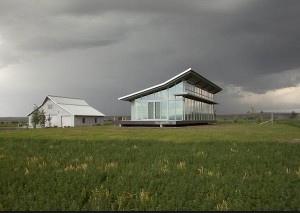
On the outskirts of a tiny agricultural town , Joseph, Oregon, where hay bales and tractors are the usual roadside attractions, sits a 1,440-square-foot glass box.

Three sides of the house are transparent, made from triple-paned glass, leaving the living area, kitchen and bedroom visible. The fourth wall is clad in cedar siding to protect against the wind in the winter. The glass walls, which climb to 16 feet in some places, overlook the 80 acres of farmland the house sits on, plus vistas of field, sky and mountain.

The couple screened four other architects before choosing Jim Olson of Olson Kundig Architects in Seattle, whose firm had designed several of the homes they had clipped from magazines over the years. “It’s not every day that someone comes in wanting something so small,” says Mr. Olson, whose residential projects usually range from 4,000 square feet to 15,000 square feet. “But I think there’s a certain luxury to be able to live in a minimal space surrounded by this incredible amount of nature.” The design and construction of the house and a nearby barn, used for guest and garage space, cost about $1 million.

A 78.5-acre parcel of land nearby, with a three-bedroom house, barn and other buildings, is listed for $1.5 million, according to Real Estate Associates.

“Everybody said, ‘How can you build a glass house out where it really gets cold in the wintertime?’,” says Ms. MartzEmerson. “Well, it’s warm and cozy inside.” Monthly utilities for the home run around $35.

Walls of glass are challenging for a meticulous couple who remove their shoes before entering the house. The couple have the glass professionally cleaned once or twice a year (the exterior takes about 10 hours), and regularly clean a few panes during their visits.

Read the rest of the story in the   Wall Street Journal

What the New Consumer Protection Bureau will do for Home Buyers

Part of the financial reform bill signed into law by President Obama includes the creation of a Consumer Financial Protection Bureau, which will write new rules and monitor problems and abuses in areas such as residential real estate settlements, credit scores, “truth in lending,” and equal credit opportunity.

KEEP THIS IN MIND

• Before the Bureau can begin implementing new laws to assist consumers, the president must nominate a director for the Bureau and the Senate must confirm the nominee. While this may take time, mortgage industry leaders say some of the core changes promised by the legislation either already are in effect or should be soon.

• Treasury Secretary Timothy F. Geithner has until Sept. 19 to designate a transfer date when key legal and regulator authorities shift from agencies such as the Federal Trade Commission and the Dept. of Housing and Urban Development (HUD), to the new consumer bureau. Once that takes place, the Bureau will begin implementing the new laws.

• One of the earliest and most widely anticipated changes expected to take effect impact home appraisals. By law, the agency must create new interim rules on appraisal accuracy and independence to replace the Home Valuation Code of Conduct (HVCC) rules imposed by Fannie Mae and Freddie Mac in 2009. Many in the real estate industry, as well as home buyers and sellers, report HVCC standards led to low home valuations that, in some instances, derailed home sales transactions.

• A national hotline system also will be developed that will allow aggrieved mortgage borrowers and others to issue complaints and alert the Bureau to unfair and deceptive practices.

• Rules requiring mortgage loan officers to verify mortgage applicants possess the ability to repay the loans they’re seeking also is high on the list.

To read the full story, please click here:
LA Times

Danny Kemp to be Inducted into Nevada County Fair’s Hall of Fame

Danny Kemp Inducted into the 2010 Nevada County Fair Hall of Fame

Danny Kemp has been named as the 2010 inductee into the Nevada County Fairgrounds’ Hall of Fame. The Fair’s Board of Directors chose Kemp for his significant contributions to the Fair and to the youth of Nevada County.

Kemp recently retired as the Ag Mechanics instructor from Bear River High School, where he had been teaching since 1986.  It was his inspiration, and his desire to support the Ag Mechanics students, that created the highly successful Ag Mechanics Auction at the 2004 Fair. Kemp worked tirelessly with the students and the Fair to create a quality exhibit that has grown to fill the Sugar Pine Lodge at the Fairgrounds. Now in its seventh year, the Ag Mechanics Auction has raised more than $240,000 to benefit the students of Nevada County.

“I am thrilled with how the Ag Mechanics Auction has grown since its inception,” said Kemp. “I am proud of the students who make it happen, and I am pleased that it opens another avenue for children to be successful.”

Kemp has always been a great supporter of the Fair. He was a member of the Nevada County Fair’s Board of Directors from 1985 through 1989, and, even today, he continues to be available to provide his assistance to the Fair team. Following each Fair, he makes it a point to meet with management and provide his positive critique and to offer his help in continuing to improve the Fair. He has always been a person that the Fair team relies upon for advice and direction.

“Danny is an individual who has made significant contributions to the Fair,” said Fairgrounds CEO Sandy Woods. “He is a person that we appreciate and admire, and his presence will indeed be missed in the future. It is a well-deserved honor for him to be named to the Fair’s Hall of Fame.”

Kemp, who has lived in Nevada County since 1975, has been a teacher in Nevada County for 34 years. He started his career at Nevada Union High School, and then began teaching at Bear River High School when it opened in 1986. In 2005, he received a Teacher of Excellence award from the California Ag Teachers Association.

Kemp will be formally inducted into the Hall of Fame at opening day ceremonies on Wednesday, August 11. In addition to access to the Fair and its many activities, he will receive a portrait donated by Shaffers Originals.

For information about the Nevada County Fair, August 11 – 15, visit www.NevadaCountyFair.com.

An Encounter With a Red Fox

The really nice thing that I like about living in Nevada County is that every once in awhile, I get to see some of natures hidden creatures. Shy among all of them up here is the red fox.

Driving down to the Flour Garden coffee shop the other morning I spied a fox crossing the road. Now I don’t know if it’s a true Sierra Nevada red fox or a lower mountain fox.   All I know is that it had a red tail and I couldn’t tell if it had a white chest since of course it was crossing the road in front of me and getting away as fast as it could. I live at an elevation of 3,700 feet and red foxes like to live at an elevation of 4,000 to 10,000 feet.

The Sierra Nevada red fox is smaller than the lowland population of red foxes.  How much smaller I don’t know and the critter wouldn’t stop to let me measure him so that I could find out who his parents were. The trappers loved the Sierra Nevada red fox because they have a softer fur than their cousins down in the valley. But it seems that the non-native red foxes  are crowding out the native red fox. The Sierra Nevada red fox is on the endangered species list.

Sierra Forestry Legacy states that the habitat for the Sierra Nevada red fox is:

“Preferred habitat for the Sierra Nevada red fox appears to be red fir and lodgepole pine forests in the subalpine zone and alpine fell-fields of the Sierra Nevada. Open areas are used for hunting, forested habitats for cover and reproduction. Edges are utilized extensively for tracking and stalking prey. The red fox hunts in forest openings, meadows, and barren rocky areas associated with its high elevation habitats. Found mostly above 6,000 feet in the summer months, Sierra Nevada populations were historically found in a variety of habitats, including alpine dwarf-shrub, wet meadow, subalpine conifer, lodgepole pine, red fir, aspen, montane chaparral, montane riparian, mixed conifer, and ponderosa pine. Jeffrey pine, eastside pine, and montane hardwood-conifer also are used. This species is known to inhabit vegetation types similar to those used by the marten and wolverine. The range of the Red fox is from the northern California Cascades eastward to the northern Sierra Nevada and then south along the Sierra crest to Tulare County.”

Well, I can say that made my morning, since the little guy was only a couple of hundred feet from my house and I was glad he was in our neighborhood.